Photography
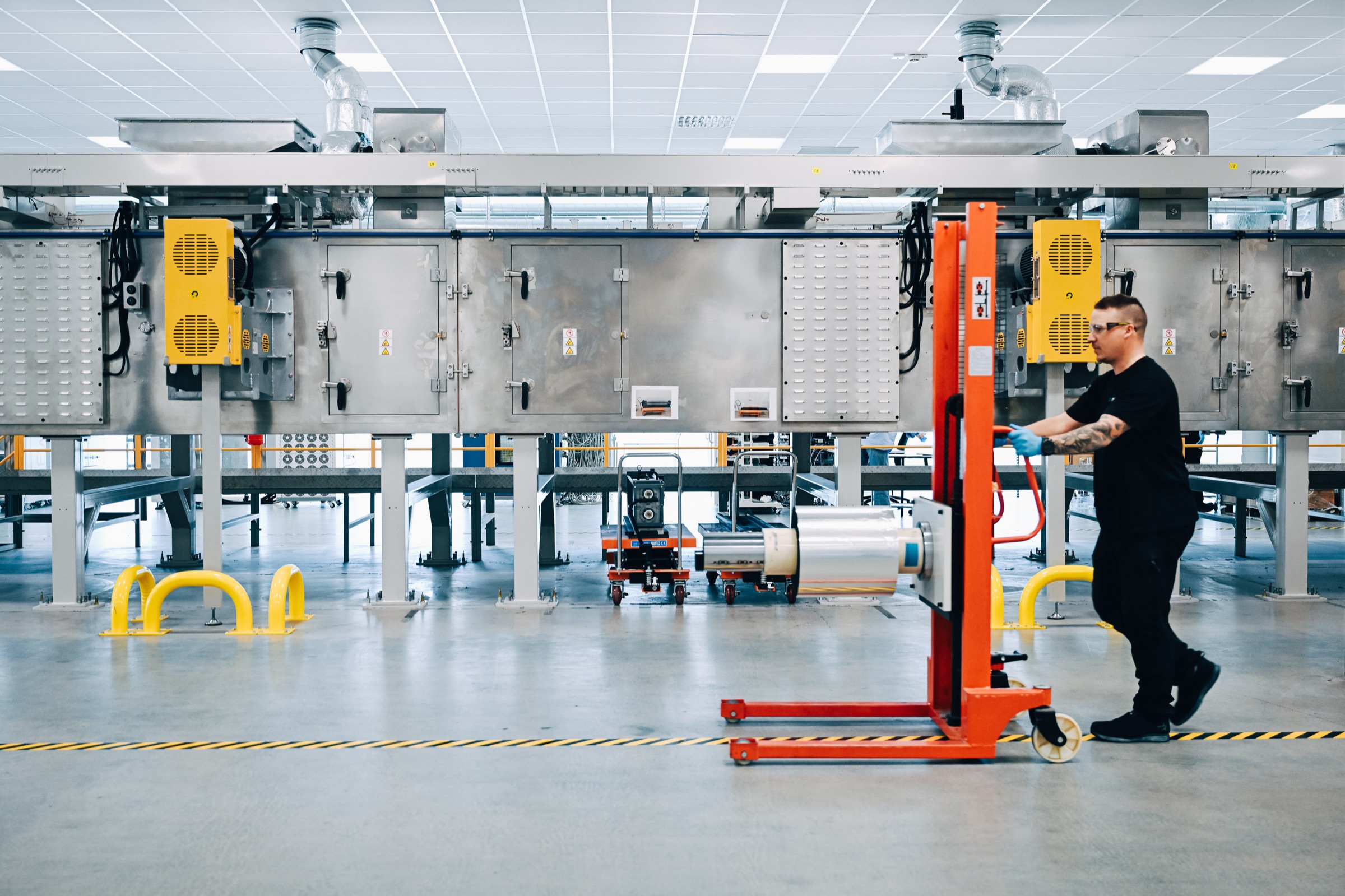
Heavy industry, honestly. Steel, machinery, and scale in natural light — the pilot plant as it is, not a rendered idea of it. The first Uppsala shoot is live on altris.se.
An industrial production line, not a lab
The camera documents a producer of sodium-ion cells at industrial scale. Credibility comes from what is actually there: steel, machinery, people at work, Uppsala daylight.
Seven shots that tell the story
The standing shot list, from the Uppsala photo brief. Every new shoot covers these before anything else.
The line
Production line with visible scale. The establishing proof shot.
At work
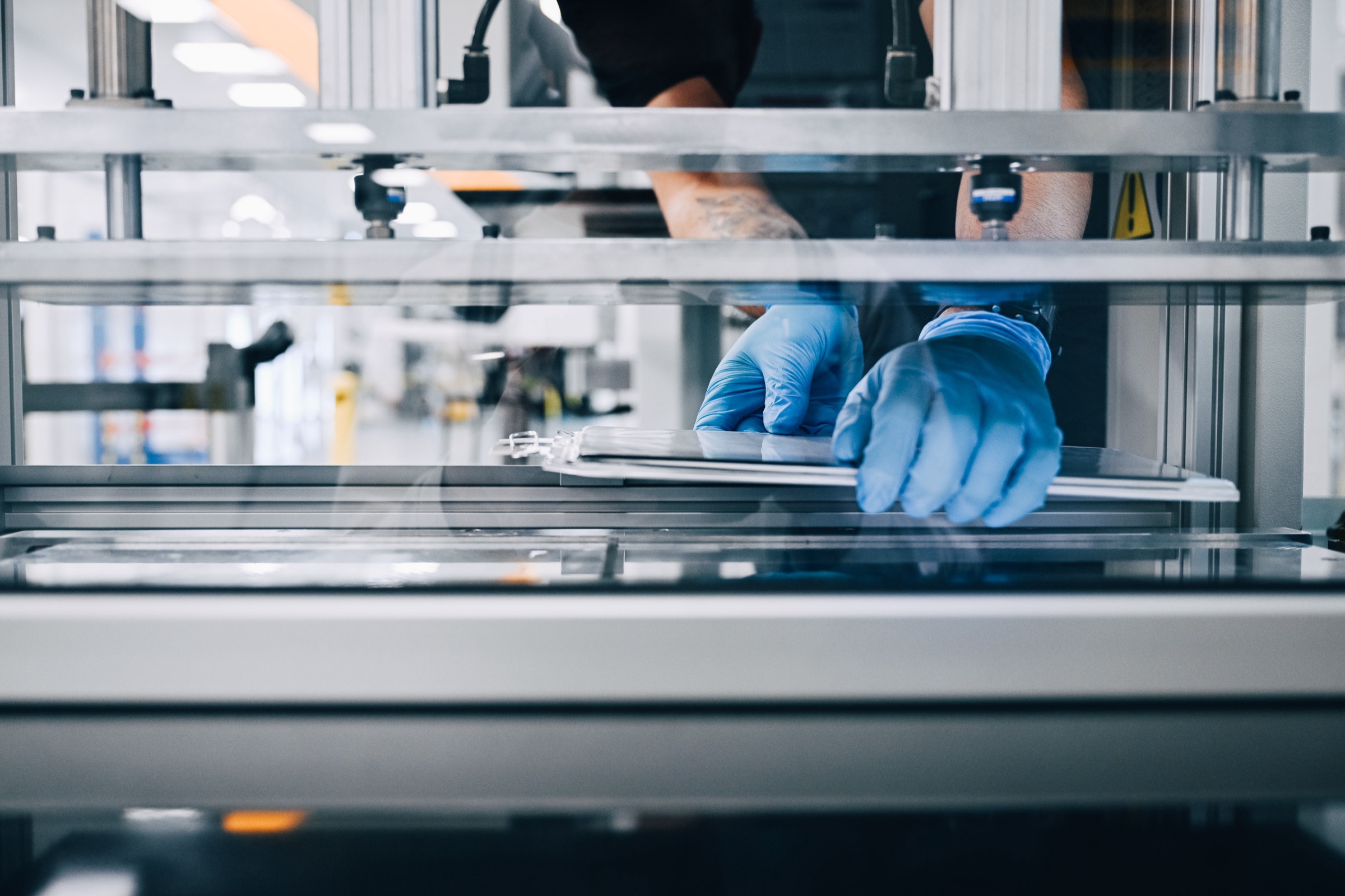
Technician at a control or test rig. Hands, screens, action.
The cell
Reference cell in hand or at the assembly station. The product, held.
Materiality
Steel, machinery, worn surfaces. Tactile, unpolished macro.
Quality control
Measurement and QC stations in use. Evidence of discipline.
The engineer
Straight, dignified portrait in the working environment. No posing.
The place
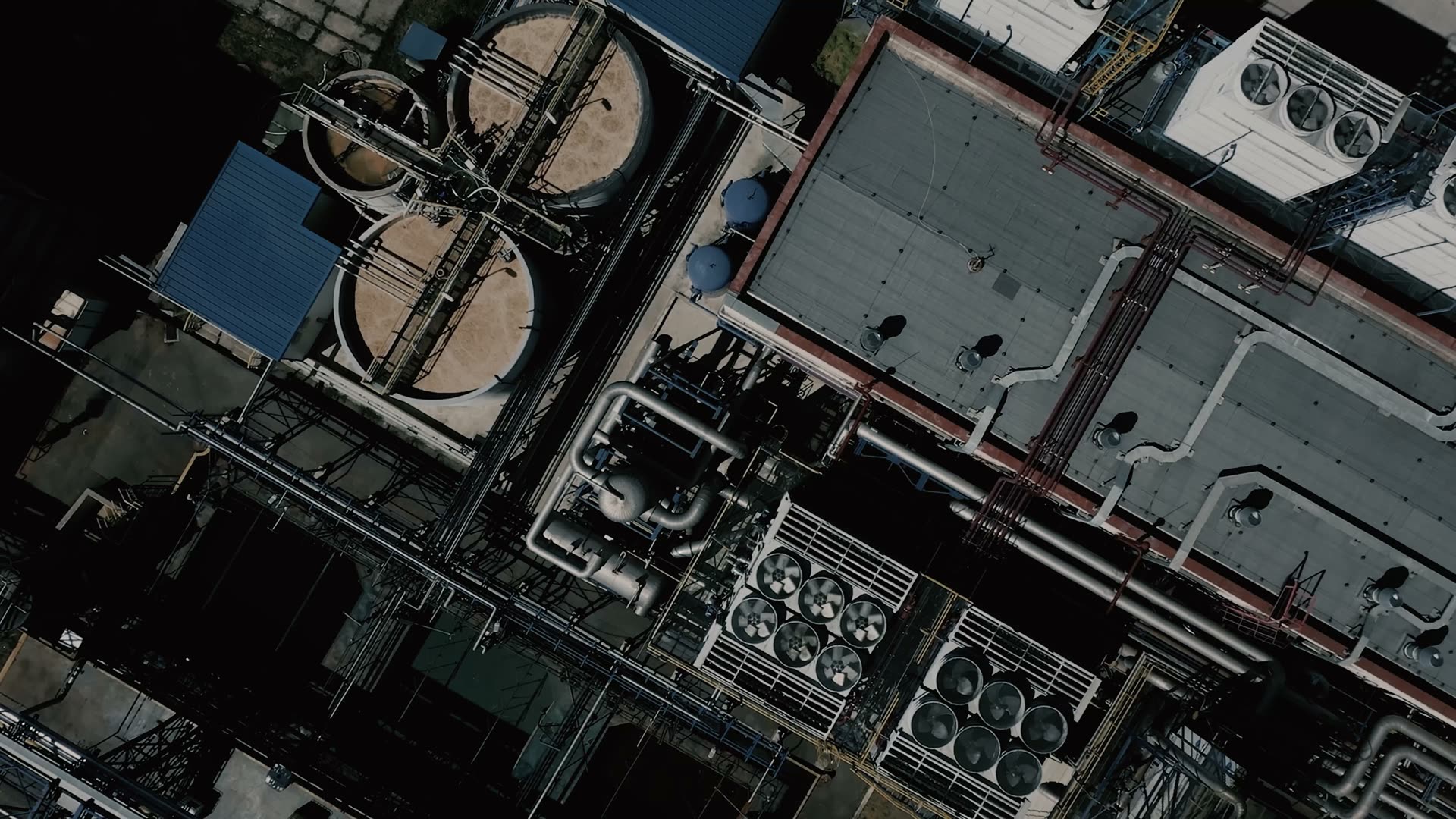
Exterior or entrance that anchors Uppsala as a real location.
B-roll
5–15 s sequences of the same subjects. Rules in section 04.
The Uppsala set
Frames from the first shoot as they run on altris.se — hero stage and editorial use.
Motion and the one sanctioned gradient
Video follows the same direction as stills. When type sits on photo or video, a scrim guarantees legibility — the single functional exception to the no-gradient rule.
| Rule | Spec |
|---|---|
| Sequence length | 5–15 s per B-roll clip |
| Format | 4K horizontal · flat/log for grade |
| Camera | static or soft handheld — no gimbal swoops, no drone orbits |
| Sound | none required; ambient only if captured |
| Grade | natural light preserved · restrained palette · no teal-orange push |
#0F1215 as implemented on altris.se. Flat 56% for cards; bottom and left gradient scrims for hero type. White type on a scrimmed area must still meet AA — verify against the darkest workable frame.The brief, distilled
Straight from the standing photo brief. When commissioning, hand the photographer this page.
✓ Always
- Natural light, hard contrast, restrained palette
- Steel, machinery, and visible scale
- Real people doing real work, straight and dignified
- Uppsala anchored as an actual place
- NDA signed before any shoot at the plant
× Never
- Lab coats, beakers, pipettes — we are not a laboratory
- Posed group photos and stock-style smiling at camera
- Glossy tech aesthetic, gradients, heavy color grades
- Sci-fi renders passed off as photography
- Cluttered frames — if it isn't the subject, it leaves
Three ways to show the product
Start with real photography. Use a 3D model or render when a controlled view is needed. Use a technical illustration to explain construction or function.
Real-life photography
Use a photograph of the actual product whenever available. Preserve its true finish, proportions, labels and context.
Browse photography →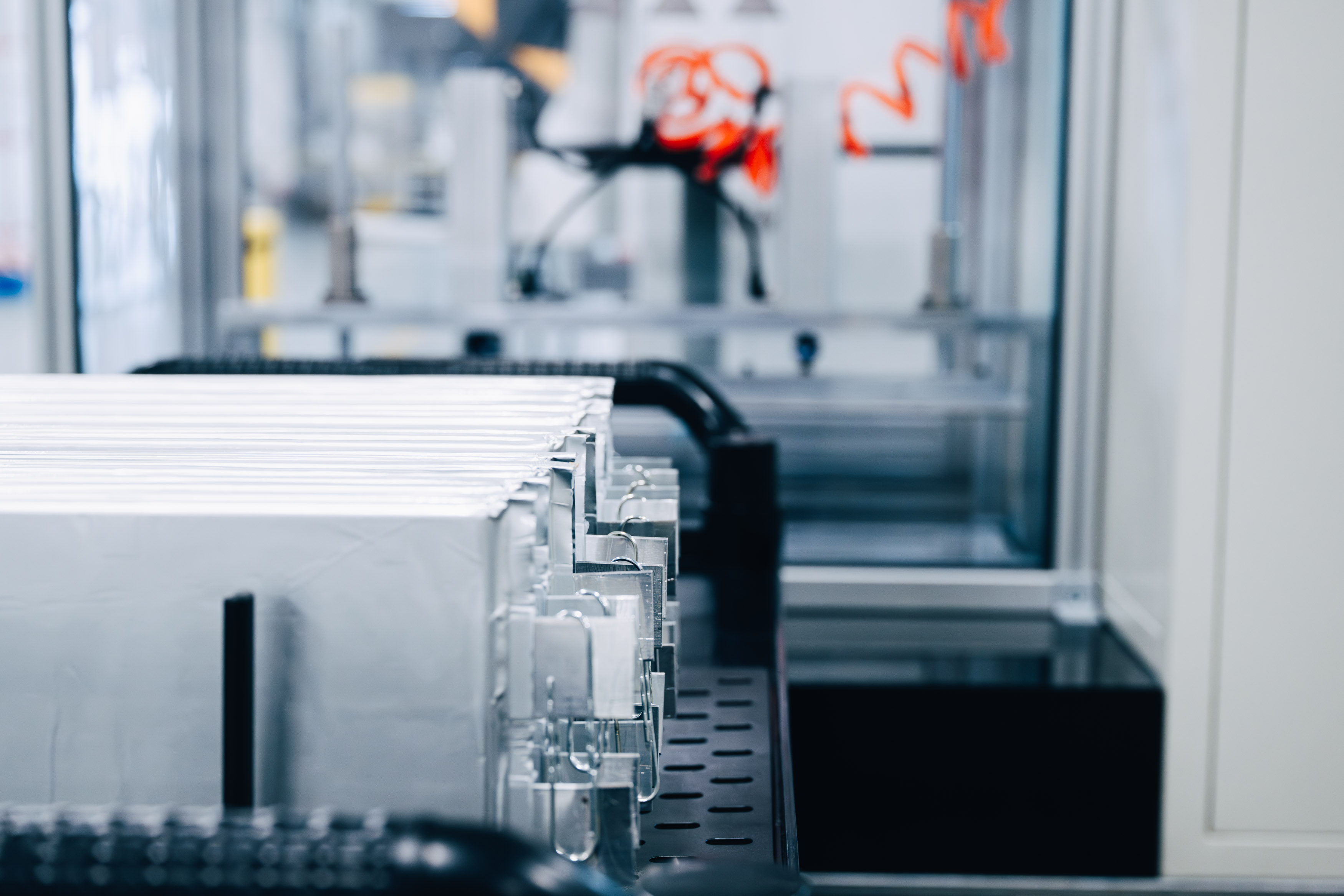
Models and rendered images
Use the supplied geometry with a silver metallic finish, controlled reflections and a neutral background. This includes interactive models and still renders.
P-Series
Drag to rotate · scroll to zoom
Download 3D model ↓Download still render ↓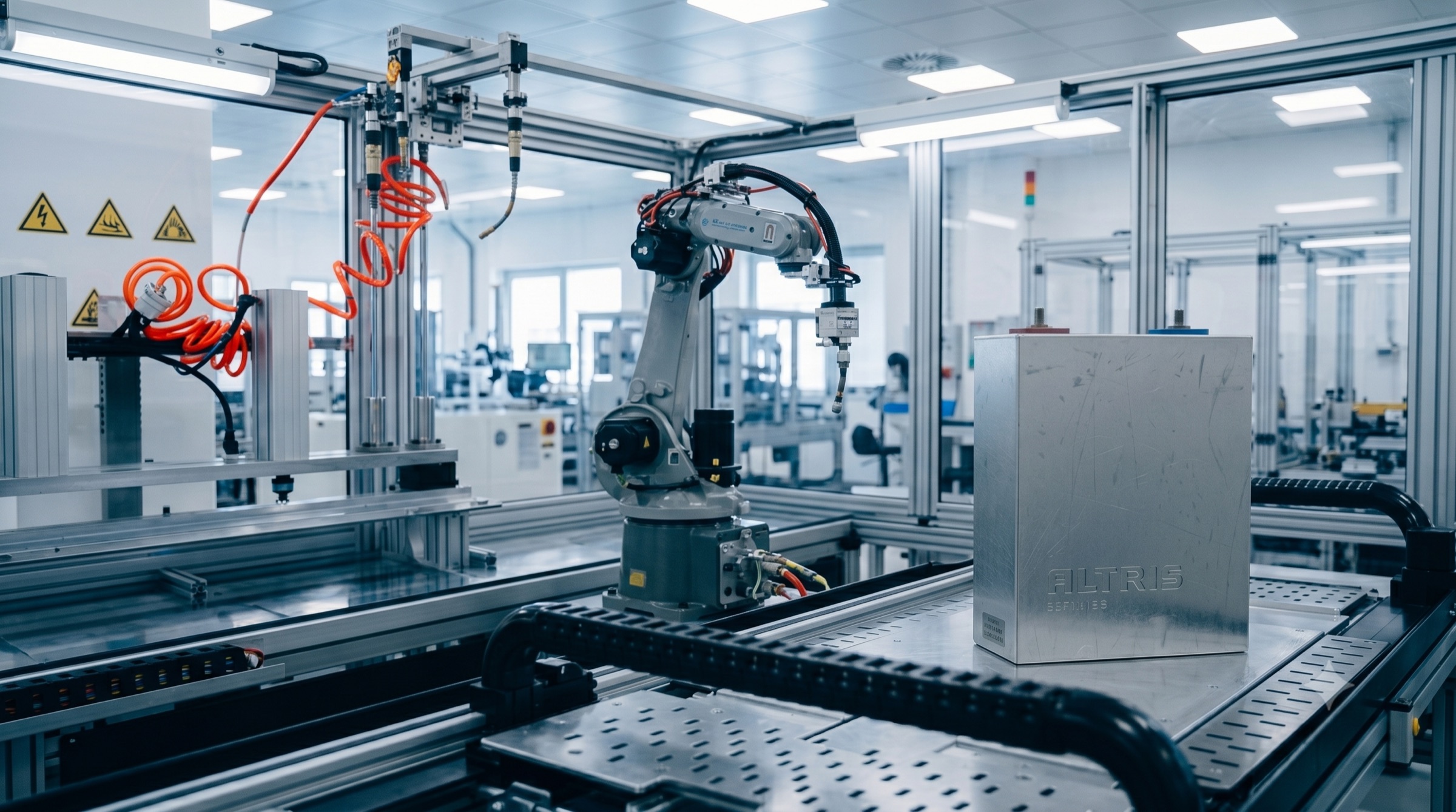
E-Series
Drag to rotate · scroll to zoom
Download 3D model ↓Download still render ↓Keep labels and typography as exact artwork. Never add or alter terminals, invent specifications, or use a generated cell as a substitute for the supplied model.
Explain what a photograph cannot
Use technical drawings for structure, dimensions and function. Keep details faithful to the engineering source; only show dimensions and labels verified against that source.
Use the original technical drawing for the product. Do not infer its dimensions from a photograph or convert a schematic into a manufacturing drawing.